
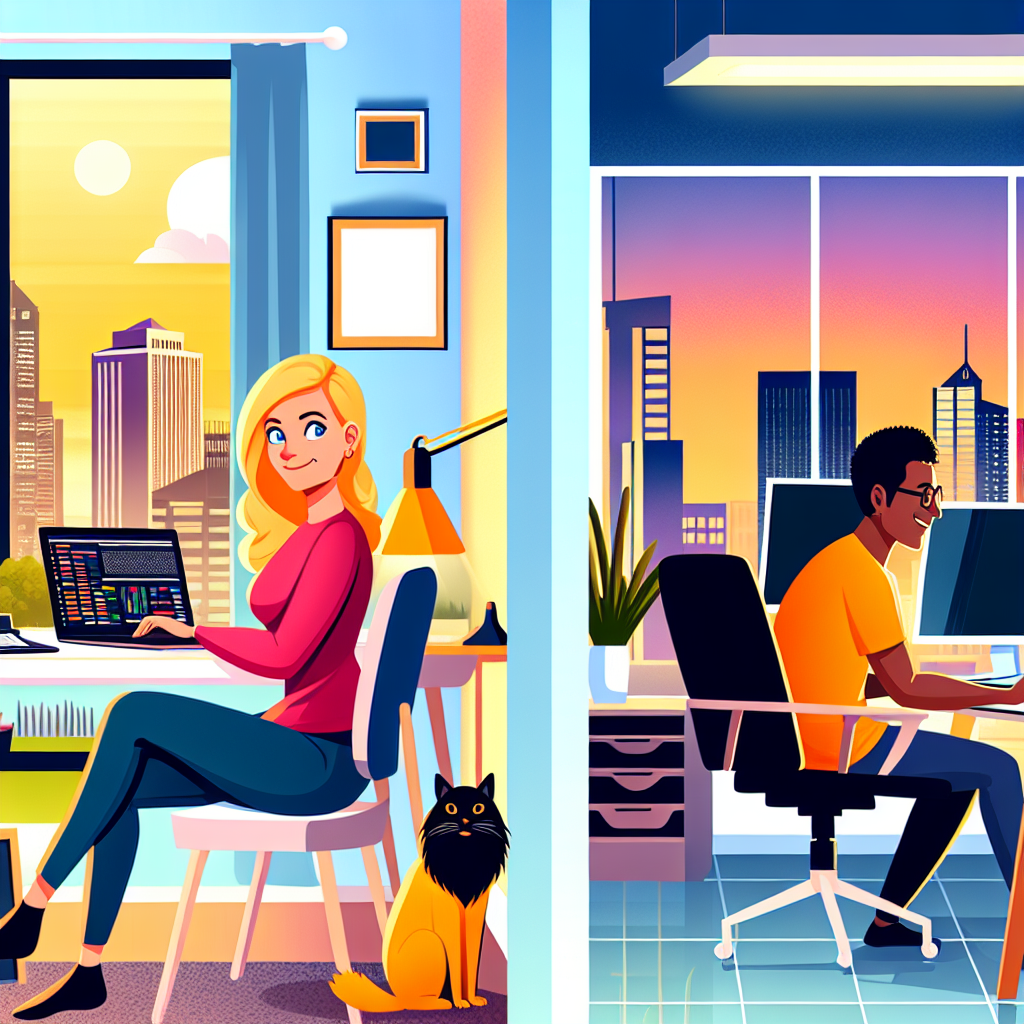
Now Write An Article On This Topic The Future of Work: Remote vs. In-Office in a Post-Pandemic World
The pandemic has flipped the way we think about work upside down, hasn’t it? From traditional office setups to embracing the comfort of our couches, the landscape has dramatically shifted. So, what does the future hold for us? Are we stepping back into the corporate jungle, or staying nestled in our homes, sipping coffee in our pajamas? Let’s dive deep into this evolving discussion of remote versus in-office work.
H2: The Great Work Experiment
Remember the early days of lockdown? Most of us thought it would only last a couple of weeks. But as days turned into months, businesses had to adapt or, well, disappear. The great work-from-home experiment had begun! It was like being thrown into a reality show where nobody quite knew the rules. Companies scrambled to implement remote working tools, while employees juggled distractions — pets, children, and the ever-present temptation of a midday nap.
H3: The Digital Transformation
With everyone suddenly working from home, technology took center stage. Zoom, Slack, and Google Meet became our lifelines. Even Grandma learned to Zoom! Organizations quickly realized the power of digital collaboration tools, and many businesses discovered that performance didn’t plummet; it flourished under these new arrangements. Surprising, right?
H2: The In-Office Comeback
After a year of remote work, many organizations, especially large companies, decided it was time to lure employees back into the office. Why? The traditional corporate culture had a strong grip, and the belief in “the office being where the magic happens” was hard to shake off. But, as we peek into the future, is the office really where the magic is?
H3: The Hybrid Model: The Best of Both Worlds?
Enter the hybrid model, which has emerged as a middle ground between remote and in-office work. Picture this: you work from home a few days a week, then mingle with colleagues in person on others. It’s like having your cake and eating it too! Companies get the best of both worlds, offering flexibility while preserving the essential camaraderie that office life provides. Sounds awesome, right?
H4: Challenges of the Hybrid Model
However, as lovely as this hybrid idea sounds, it’s not all rainbows and butterflies. Organizations must tackle challenges like scheduling conflicts, communication gaps, and the risk of creating a two-tier workforce. If half the team is in the office while the other half is remote, how do you ensure team spirit doesn’t dissolve like sugar in water?
H2: Employee Perspectives on Flexibility
Many employees have embraced remote work with open arms. Imagine not having to commute while still being just as productive (or maybe more!). It gives them a chance to balance work and life better. And let’s talk about the perks — pants? Optional. Midday yoga session? Yes, please!
H3: The Downsides of Isolation
But is it all sunshine and rainbows? Not quite. Some employees reported feelings of isolation and disconnection from their teams. Humans are social creatures! So, how do we strike that balance between freedom and connection? That’s the big question.
H2: Productivity Paradox
So, what’s the deal with productivity? You might assume that working from home means more Netflix breaks and less work being done, but studies suggest otherwise. Employees often work longer hours and feel pressured to prove their worth remotely. It’s almost as if they’re running on a hamster wheel — constantly spinning but going nowhere.
H3: The Importance of Clear Boundaries
Employers need to establish clear boundaries to prevent burnout. Imagine trying to relax at home but constantly hearing work emails pinging. That’s a tough spot! Establishing a remote work culture that promotes well-being is crucial.
H2: Company Culture: The Silent Superstar
You can’t talk about the future of work without mentioning company culture. It’s like the glue that holds everything together. Think about it — a company with a thriving culture fosters collaboration and encourages innovation. But when everyone’s scattered, how do you maintain that vibe?
H3: The Role of Leadership
Leaders must take an active role in building and maintaining company culture, whether employees are in-house or remote. Regular check-ins, virtual team-building activities, and open communication channels go a long way. Just like watering a plant, it needs care and attention!
H2: Addressing Long-Term Changes
As we settle into this new normal, it’s vital to recognize that the future of work isn’t just about choosing between remote or in-office. It’s about understanding and accommodating diverse needs.
H3: Flexibility as a Core Value
Organizations that prioritize flexibility are more likely to attract top talent. After all, who wouldn’t want to work for a company that understands life isn’t merely a nine-to-five grind? Offering flexible schedules, remote work options, and mental health support creates a more appealing environment.
H4: The Shift in Talent Acquisition
Gone are the days when hiring was limited to local talent. Now, companies have a global pool to choose from. This shift opens the door to diverse voices and perspectives, ultimately leading to more innovative solutions. But it also means navigating different time zones and cultural differences. A challenge, but one worth embracing!
H2: Emerging Technologies and the Future Workspace
As technology constantly evolves, we can expect innovative solutions tailored for both remote and in-office settings. Imagine virtual reality (VR) meetings or AI-driven task management tools streamlining our workflows. It’s not science fiction; this is happening now!
H3: Preparing for AI Integration
With the rise of AI, jobs will inevitably change. Some may disappear, while others will evolve. Embracing this shift is crucial. Instead of fearing it, think of it as a chance to upskill and become more adept in a tech-driven world. It’s like leveling up in a video game!
H2: Conclusion: Embracing the Future
So, what’s the verdict? The future of work is not a one-size-fits-all model. It’s a creative blend of remote and in-office practices, built on flexibility, trust, and adaptability. The overarching takeaway? A happy employee is a productive employee. If organizations can grasp this concept, we might just be in for an exciting journey ahead.
FAQs
What are the main benefits of remote work?
Remote work allows for flexibility, better work-life balance, and saves time and money on commuting. It often results in happier and more productive employees.
How can organizations maintain a strong company culture remotely?
Regular virtual meetings, team-building activities, and open communication channels help maintain and even strengthen company culture in a remote setting.
Are there any downsides to remote work?
Yes, some employees may experience feelings of isolation, difficulty in separating work from personal life, and potential challenges in collaboration and communication.
What is a hybrid work model?
A hybrid work model combines both remote and in-office work, allowing employees to enjoy the flexibility of working from home some days while still engaging in-person with colleagues.
How can technology help in a remote work environment?
Technology facilitates communication and collaboration through tools like video conferencing, project management software, and instant messaging, making remote work more efficient and cohesive.